
Safety and health in Cambodia
សុវត្ថិភាព និងសុខភាព
Cambodia is a welcoming country where most visits pass without incident, but the risks that do exist are specific: bag snatching, road traffic, and healthcare that varies sharply by city. Here is what to plan for.
Main petty crime
Phone snatching
From passing motorbikes, in cities
Biggest real risk
Road traffic
Motorbike accidents lead injury claims
Emergency numbers
117 / 119
Police / ambulance; response varies
Crime and scams
Violent crime against foreigners is uncommon. The dominant risk is opportunistic theft — phones and bags snatched by a passenger on a passing motorbike, most often on quieter city streets at night or in the early morning. Walk with your bag on the side away from the road, keep your phone out of sight while walking, and use app-booked transport after dark.
Common scams are low-stakes but persistent: tuk-tuk drivers quoting several times the app price, 'closed today' redirections to a shop or a different temple, inflated tour and ferry commissions, and card skimming at standalone ATMs. Use ATMs inside bank branches, count change, and check tuk-tuk fares against an app before agreeing.
Fake or heavily diluted alcohol appears occasionally in cheap party venues, and drink-spiking has been reported in nightlife districts. Watch your drink, stick to sealed bottles and reputable bars, and never leave belongings unattended on beaches.
Roads and traffic
Road traffic is the single largest cause of serious injury to visitors. Lane discipline is loose, motorbikes flow against traffic, and street lighting outside the centres is poor. If you ride, wear a proper helmet — a legal requirement — and avoid riding at night or after drinking.
For longer distances choose reputable bus operators over minivans, which are driven harder. Seatbelts are often missing in older vehicles; check before you commit to a long journey. Pedestrian crossings carry little authority, so cross steadily and predictably rather than dashing.
Health and medical care
Phnom Penh and Siem Reap have international-standard private clinics and hospitals used by expats, with English-speaking staff and up-front payment expected. Provincial facilities are far more basic, and anything serious is usually stabilised locally then evacuated to Bangkok or Singapore.
Travel insurance with medical evacuation cover is not optional here — evacuation costs run into tens of thousands of dollars. Confirm your policy covers motorbike riding if you plan to rent one, because many exclude it or require a valid licence for the engine size.
Consult a travel clinic well before departure about routine vaccinations plus hepatitis A and typhoid; rabies and Japanese encephalitis are considered for longer or rural stays. Dengue is present year-round and peaks in the rainy season, so use repellent day and night. Malaria risk is low in cities and concentrated in forested border areas.
Food, water and everyday precautions
Do not drink tap water. Bottled and filtered water is cheap and everywhere; ice in established restaurants and cafés is normally made from purified water. Street food is one of the pleasures of Cambodia — pick busy stalls with high turnover and food cooked to order in front of you.
Heat is underrated as a risk. Between March and May, temperatures regularly exceed 35°C with high humidity; plan temple visits for early morning, drink more than you think you need, and add electrolytes on heavy days.
Keep a photo of your passport and visa on your phone, note your embassy's contact details, and carry a small amount of cash separate from your wallet. Register with your embassy's traveller service if it offers one.
Frequently asked questions
- Is Cambodia safe for tourists?
- Generally yes. Violent crime against visitors is rare, and most trips pass without incident. The realistic risks are bag and phone snatching from passing motorbikes, overcharging scams, and road traffic accidents rather than serious crime.
- Is Cambodia safe for solo female travellers?
- Many women travel Cambodia solo without problems. The usual precautions apply: use app-booked transport at night, avoid walking alone in unlit areas, keep an eye on your drink in nightlife districts, and dress modestly at temples and in rural areas.
- What vaccinations do I need for Cambodia?
- Routine vaccinations should be up to date, and travel clinics commonly recommend hepatitis A and typhoid. Rabies and Japanese encephalitis are considered for longer or rural stays. Check with a travel clinic several weeks before you fly.
- Can you drink the tap water in Cambodia?
- No. Use bottled or filtered water, which is inexpensive and widely available. Ice in established restaurants and cafés is normally made from purified water and is generally fine.
- Do I need travel insurance for Cambodia?
- Yes, with medical evacuation cover. Serious cases are often evacuated to Bangkok or Singapore, which can cost tens of thousands of dollars. If you plan to ride a motorbike, confirm your policy covers it — many exclude it or require a valid licence.
- Are there good hospitals in Cambodia?
- Phnom Penh and Siem Reap have international private hospitals and clinics with English-speaking staff, and payment is expected up front. Provincial facilities are basic, so serious conditions are usually stabilised locally and then transferred abroad.
Keep reading
- Getting around Cambodia: buses, ferries and flights
- Cambodia visas: e-Visa, arrival and extensions
- Cambodia weather and the best time to visit
- Current alerts and advisories for Cambodia
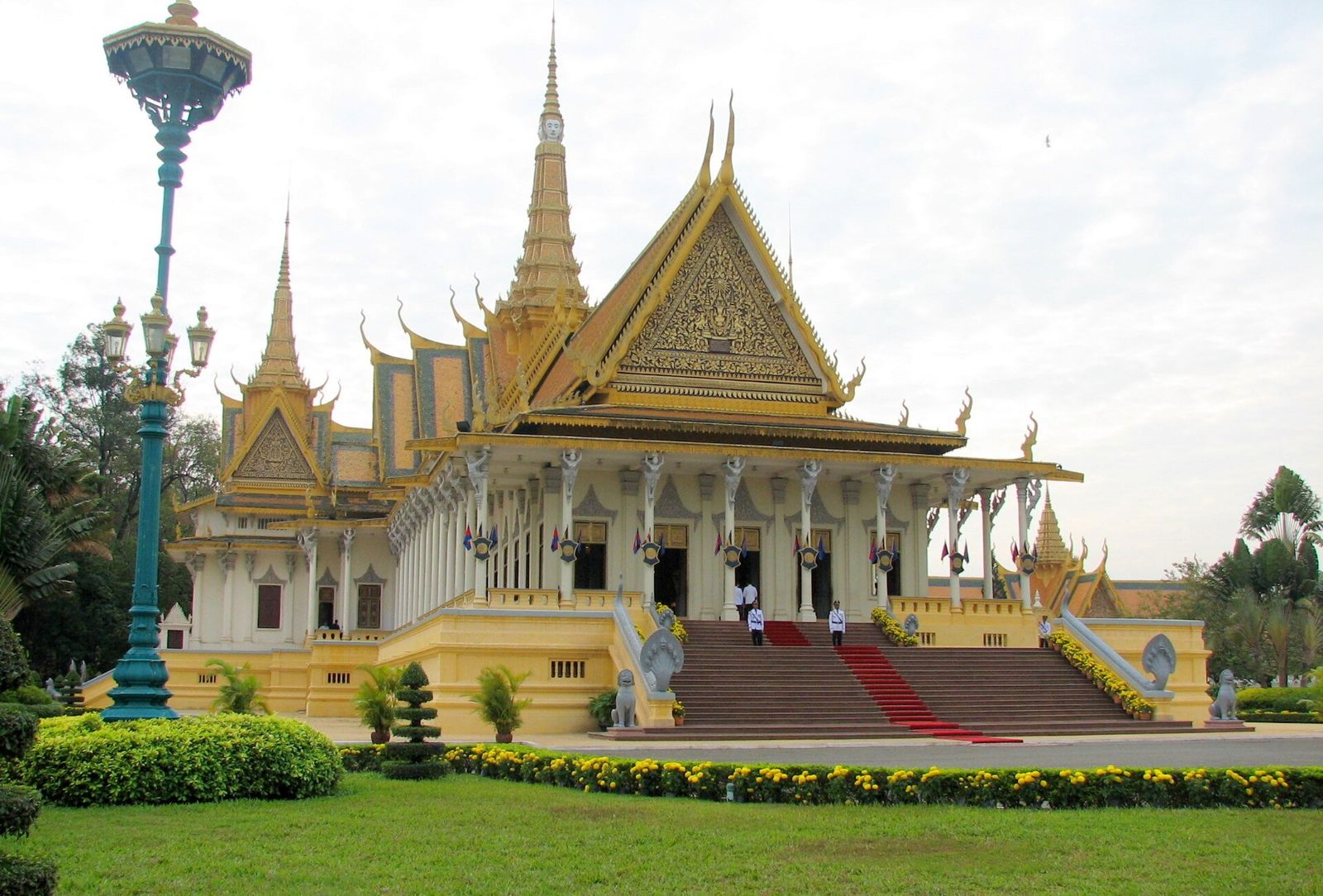
Photo: Royal Palace, Phnom Penh — Wikimedia Commons (CC BY-SA 3.0)