
Cambodia weather and when to visit
អាកាសធាតុកម្ពុជា
Cambodia has two seasons rather than four, and choosing between them decides how your trip feels. Here is the monsoon cycle month by month, with what it means for Angkor, the coast and the Tonle Sap.
Cool dry season
Nov – Feb
Best overall weather; peak prices
Hot dry season
Mar – May
Often 35-40°C inland
Monsoon
Jun – Oct
Green landscapes, afternoon rain
The two-season cycle
Cambodia sits in the tropical monsoon belt. The southwest monsoon draws moist air off the Gulf of Thailand from roughly May to October, delivering nearly all the country's rain; the northeast monsoon then brings dry, cooler air from November to March. Temperatures vary far less than rainfall does — lowland highs sit in the low thirties Celsius most of the year.
Rain in the wet season is rarely all-day drizzle. The typical pattern is a bright morning followed by an intense downpour in the late afternoon lasting one to two hours, then clearing. September and October are the wettest months and the only period when multi-day rain and localised flooding are common, particularly along the Mekong and around the Tonle Sap.
November to February: the cool dry season
This is the most comfortable window and the main tourist season. Days are sunny with highs of 28-32°C, humidity drops noticeably, and nights in Phnom Penh and Siem Reap can fall to the low twenties. December and January are the driest and coolest months.
The trade-off is crowds and cost. Angkor's sunrise viewpoints are busy, hotel rates in Siem Reap and along the coast are at their annual peak, and popular tours book out — particularly around Christmas, New Year and the Water Festival in November.
March to May: the hot dry season
Heat builds through March and peaks in April, when inland highs regularly reach 35-40°C and the humidity climbs ahead of the first rains. Temple visits need an early start and a hard stop by mid-morning; afternoons are best spent indoors or by water.
It is also when Khmer New Year falls, so the country is at its most festive even as it is at its hottest. The coast and the islands are more bearable than Phnom Penh or Siem Reap thanks to sea breezes, and prices for inland accommodation soften.
June to October: the monsoon
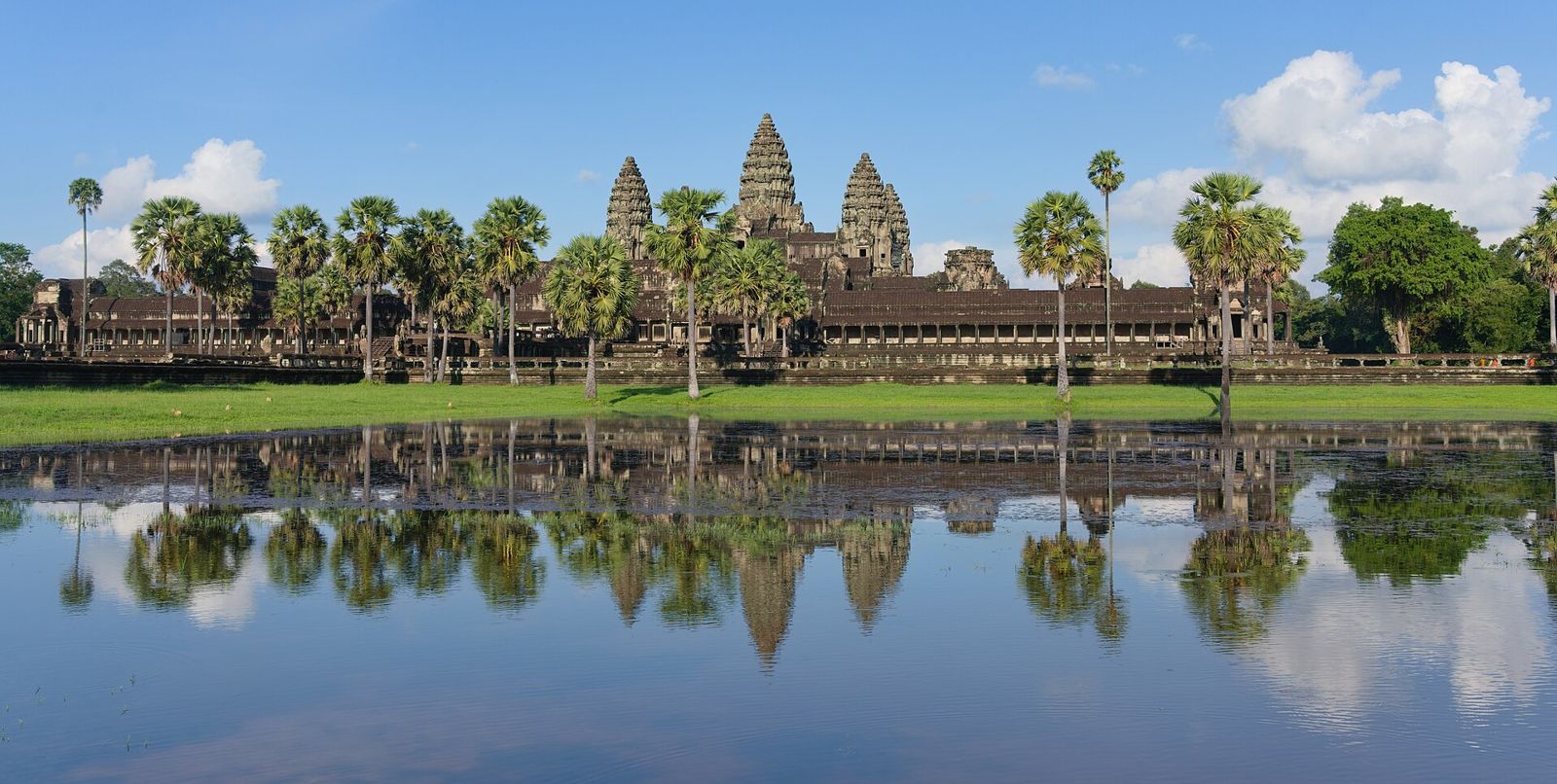
The green season is the cheapest and quietest time to travel, and visually the best. Rice paddies are vivid, moats and waterfalls are full, and Angkor's temples photograph beautifully with dramatic skies and few visitors. Rain typically confines itself to a heavy afternoon burst.
It is also the only time to see the Tonle Sap at full extent: the lake swells to several times its dry-season area, and the floating villages and flooded forest near Kampong Phluk are genuinely afloat rather than stranded on stilts above dry ground.
The caveats are real, though. Unpaved roads in remote provinces turn to mud, some outlying temples and island boat services become unreliable, and September and October can bring several consecutive wet days. Coastal seas are rougher and some island transfers are cancelled.
Choosing your month
For the best all-round weather with an accepted premium in price and crowds, pick December to February. For the best compromise, target the shoulder months of November and early June — decent weather, lower rates, thinner crowds.
If your priority is photography, the Tonle Sap or budget, aim for July to early September. If it is the coast and islands, favour November to April, when seas are calm and ferries run reliably. Our weather page carries current forecasts for Phnom Penh, Siem Reap, Sihanoukville, Battambang and other cities.
Frequently asked questions
- What is the best time to visit Cambodia?
- November to February is the best overall window: sunny days, highs around 28-32°C, low humidity and little rain. It is also the busiest and most expensive season, so book Angkor-area accommodation early.
- When is Cambodia's rainy season?
- The southwest monsoon runs from roughly May or June to October, with September and October the wettest months. Rain usually comes as a heavy afternoon downpour of one to two hours rather than all-day rain.
- How hot does Cambodia get?
- April is the hottest month, with inland highs commonly between 35°C and 40°C in Phnom Penh and Siem Reap. Cool-season highs sit around 28-32°C, and coastal areas stay a few degrees more comfortable thanks to sea breezes.
- Is it worth visiting Angkor in the rainy season?
- Yes. The temples are far less crowded, the moats and surrounding forest are full and green, and prices are lower. Plan around the afternoon rain and accept that a few remote sites may be harder to reach on unpaved roads.
- When is the Tonle Sap lake at its fullest?
- Between roughly August and October, when monsoon rain and Mekong backflow expand the lake to several times its dry-season size. This is the best time to see the floating villages and flooded forest.
- Does Cambodia get typhoons?
- Cambodia is largely shielded by Vietnam's mountains and rarely takes a direct typhoon hit. It does receive the weakened remnants of Pacific storms during the monsoon, which can cause several days of heavy rain and river flooding.
Keep reading
- Cambodia weather forecast by city
- Cambodia's festivals and when they fall
- Siem Reap and Angkor visitor guide
- Explore Cambodia province by province
Photo: Angkor Wat — Wikimedia Commons (CC BY-SA 4.0)