
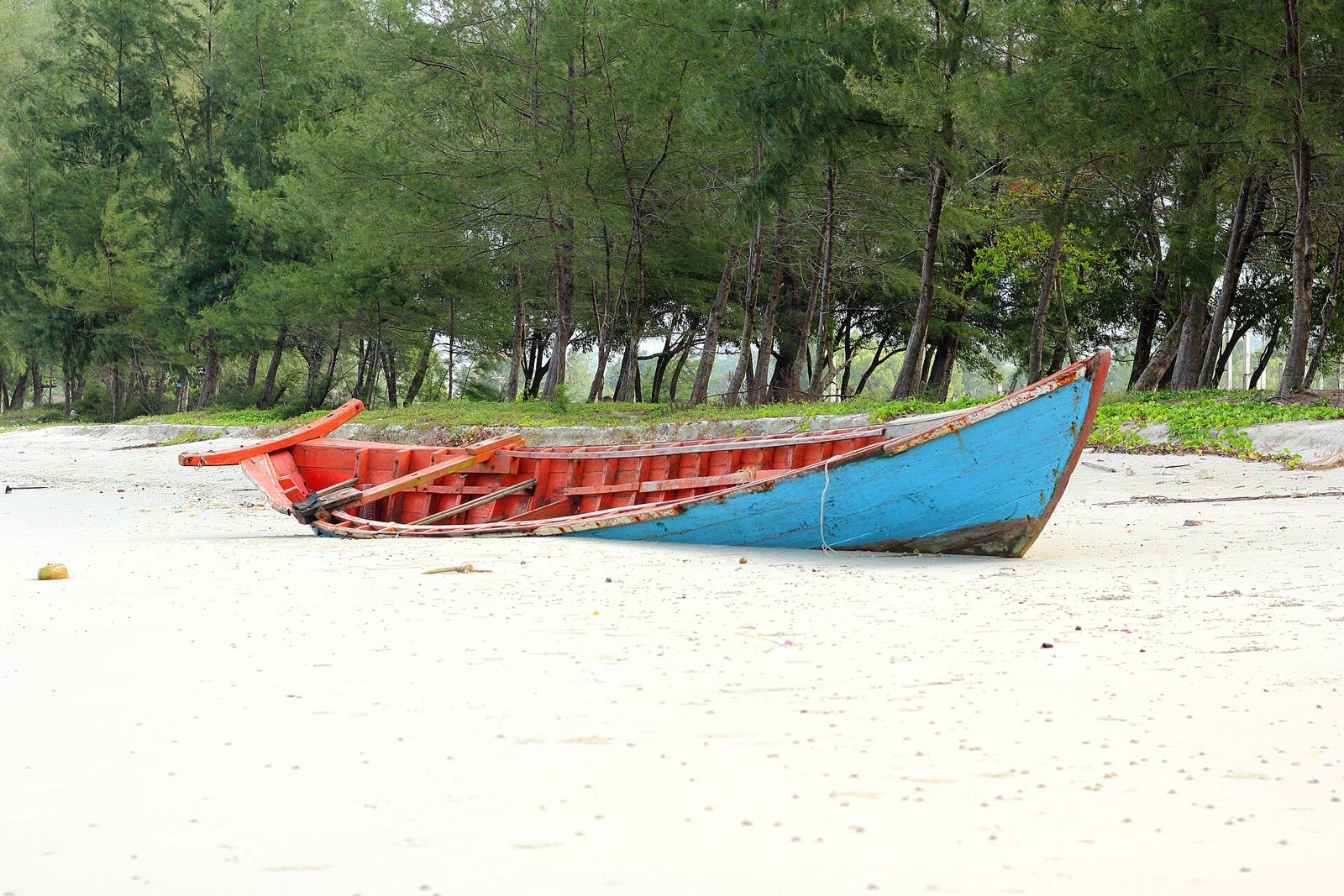
Cambodia's beaches and islands
ឆ្នេរ និងកោះកម្ពុជា
Cambodia has some 440 kilometres of coastline and around 60 islands, most of them off Sihanoukville and Koh Kong. The character varies sharply — party sand, silent bungalow bays, crab markets and pepper farms — so choosing the right stretch matters more than in most beach destinations.
Best months
November – April
Dry season, calm seas
Ferry to Koh Rong
US$20 – 25 return
45 – 60 minutes from Sihanoukville
Island bungalow
US$25 – 80
Per night, higher over holidays
The islands: Koh Rong and its neighbours
Koh Rong is the largest and busiest island. Koh Touch village is the backpacker and nightlife end, while Long Set (4K) Beach, Sok San and Coconut Beach are progressively quieter, with long stretches of pale sand and modest bungalow resorts. Fast ferries take 45-60 minutes from Sihanoukville's pier.
Koh Rong Sanloem is the calmer twin. Saracen Bay is the main crescent of resorts, Lazy Beach and Sunset Beach sit on the far side over a short jungle walk, and M'Pai Bay is the sociable village end. Electricity is often generator-based with set hours and there are no roads, which is much of the appeal.
Koh Ta Kiev and Koh Thmei are the rustic options — simple huts, limited power, snorkelling straight off the beach. Further west, Koh Kong Island and the Koh Sdach group are harder to reach and correspondingly empty. Overnight bioluminescent plankton swims are a common add-on around Koh Rong.
Book accommodation before arriving in peak season, and note that ferry operators sell separate tickets — keep your return stub. Most islands have limited ATM access, so carry cash in small dollar notes.
The mainland coast: Sihanoukville, Otres, Kep and Kampot
Sihanoukville town has changed heavily with casino and high-rise construction, and its central beaches are no longer the draw. Otres Beach, a short ride south, keeps a quieter low-rise strip and is the practical mainland base for the coast.
Kep is the gentlest stop: a small sitting beach, the crab market where you pick your crab and have it cooked with Kampot pepper, and abandoned modernist villas in the hills behind. Kep National Park's loop trail gives the best coastal views on the mainland.
Kampot, half an hour inland on a tidal river, has no beach but is the most liveable town on the coast — riverside sunsets, pepper plantations, the Bokor plateau above, and easy access to Kep and Rabbit Island (Koh Tonsay), a 20-minute boat ride with basic huts.
Koh Kong, near the Thai border, is the gateway to the Cardamom rainforest, mangrove boardwalks and Peam Krasop. It suits travellers combining coast with jungle rather than those after a beach week.
When to go, and what the weather does
The dry season from November to April is the reliable window: calm seas, clear water and dependable ferries. December and January are the coolest and busiest, with Khmer New Year in April bringing domestic crowds and higher room rates.
The southwest monsoon runs roughly June to October. Rain arrives as heavy afternoon downpours rather than all-day drizzle, and prices drop sharply, but ferry cancellations become common and some island resorts close entirely for the low season.
Sea temperature stays around 28-30°C year-round. Jellyfish appear seasonally, sandflies are a nuisance on some quieter beaches, and the sun is stronger than it feels in the sea breeze — reef-safe sunscreen and a rash top go a long way.
Getting there and practicalities
From Phnom Penh, the expressway puts Sihanoukville around three hours away by bus or private car; Kampot and Kep are four to five hours. Sihanoukville also has an international airport with regional flights. Buses run between Sihanoukville, Kampot, Kep and Koh Kong throughout the day.
Ferries to Koh Rong and Koh Rong Sanloem leave from the Sihanoukville pier several times daily, with the last return in the mid to late afternoon — miss it and you are staying the night. Return tickets are usually US$20-25 and are open-dated with some operators.
Accommodation ranges from US$10 dorms and US$25-40 simple bungalows to US$80-250 for the better island resorts. Water is precious on the islands, wifi is slow or absent, and rubbish collection is limited, so take what you bring back with you.
Frequently asked questions
- Which is the best beach in Cambodia?
- For classic white sand, Long Set (4K) Beach on Koh Rong and Lazy Beach on Koh Rong Sanloem are the standouts. On the mainland, Otres near Sihanoukville is the most pleasant strip, while Kep offers a calm sitting beach and the crab market rather than swimming sand.
- When is the best time to visit Cambodia's beaches?
- November to April, during the dry season, when seas are calm and ferries run reliably. December and January are the peak. June to October brings the southwest monsoon, cheaper rooms, and frequent ferry cancellations.
- How do I get to Koh Rong?
- Fast ferries leave from the Sihanoukville pier several times a day and take 45-60 minutes, with return tickets around US$20-25. Sihanoukville is about three hours from Phnom Penh by road on the expressway, or a short domestic flight.
- Is Koh Rong or Koh Rong Sanloem better?
- Koh Rong is larger and livelier, with nightlife at Koh Touch and quieter beaches further round. Koh Rong Sanloem is calmer, centred on Saracen Bay with quiet resorts and no roads. Choose Sanloem for peace, Koh Rong for variety and social life.
- Is Sihanoukville still worth visiting?
- The town centre has been reshaped by casino and high-rise construction and its central beaches are no longer the attraction. Most travellers use it as the ferry gateway and stay at Otres, or skip it for Kep, Kampot and the islands.
- How much does an island bungalow cost in Cambodia?
- Simple beach bungalows run US$25-40 a night, dorms from about US$10, and the better island resorts US$80-250. Prices rise over Christmas, New Year and Khmer New Year, and many island places close during the low season.
Keep reading
- Cambodia weather and the best time to visit
- Sihanoukville property: beachfront condos and land
- Kampot property: riverside houses for sale and rent
- Explore Preah Sihanouk on the map
- Cambodian food: what to eat on the coast
- Cambodia visa guide
Photo: Sihanoukville coast — Wikimedia Commons (CC BY-SA 4.0)