
Cambodian food
មុខម្ហូបខ្មែរ
Khmer cooking is built on prahok fermented fish, kroeung spice paste, palm sugar, lime and river herbs — less chilli-forward than Thai food, less anise-heavy than Vietnamese. This guide covers the dishes worth seeking out, what they cost, and how eating out actually works.
Street meal
US$1.50 – 3
Noodles, rice plates, grilled skewers
Local restaurant
US$3 – 6
Per dish, shared family style
National dish
Fish amok
Steamed curry in banana leaf
The dishes to try first
Fish amok is the dish most often called national: freshwater fish folded through kroeung paste and coconut cream, then steamed in a banana leaf until it sets like a savoury custard. Good versions are fragrant with lemongrass and turmeric rather than sweet.
Kuy teav is the breakfast institution — a clear pork or beef broth over rice noodles, dressed at the table with bean sprouts, lime, fried garlic and chilli. Bai sach chrouk, grilled marinated pork over broken rice with pickles and a bowl of broth, is the other morning staple, and both are eaten before eight in the morning.
Lok lak is stir-fried beef in a pepper and lime sauce served over tomato, lettuce and onion with a dipping sauce of Kampot pepper and lime — a legacy of the French period. Samlor korko, a thick vegetable and fish stew thickened with toasted ground rice, is the everyday home dish, and num banh chok, rice noodles under a green fish gravy, is the classic morning market food.
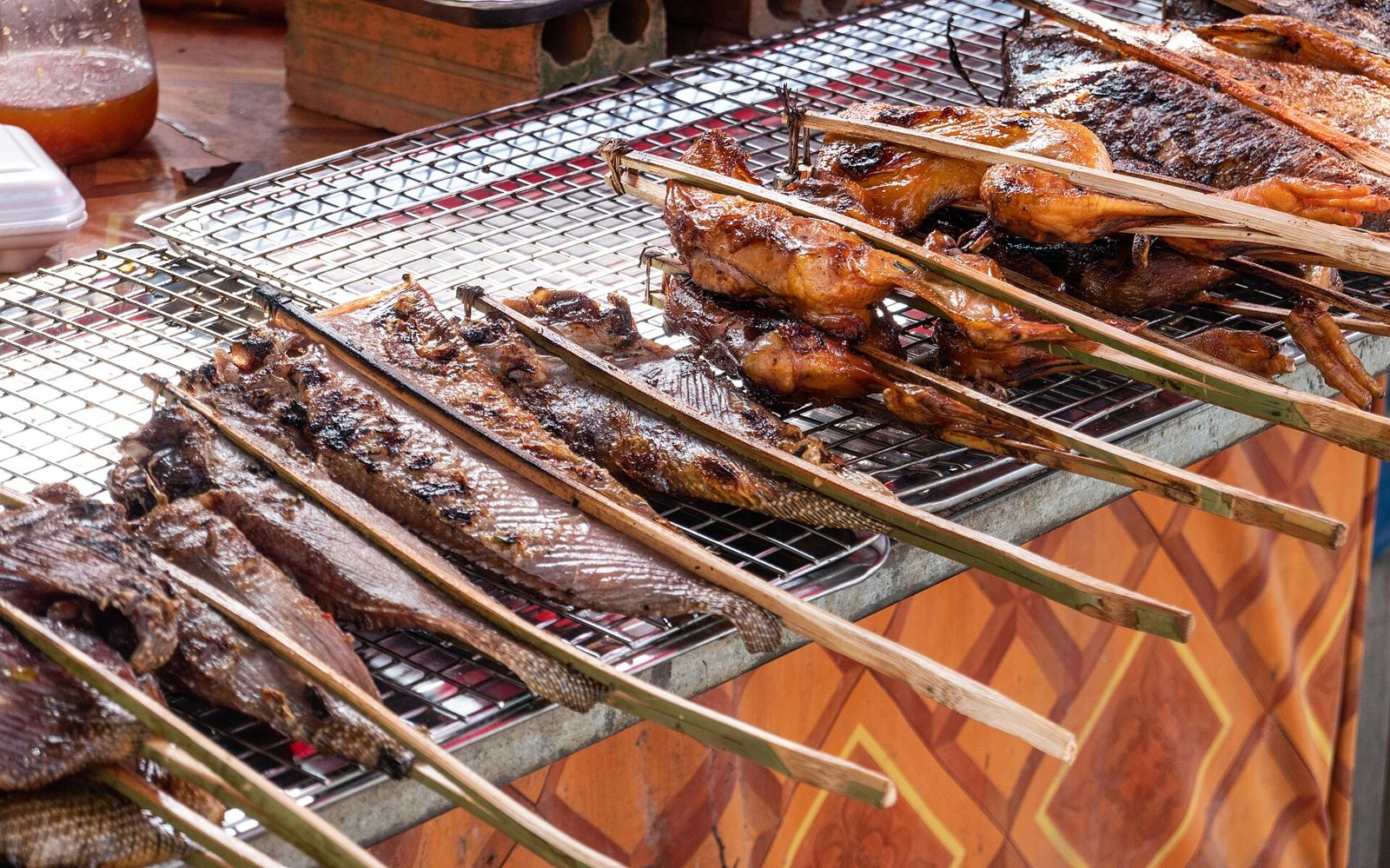
For grilled food, look for chicken and pork skewers with palm sugar glaze, Kampot pepper crab in Kep, and freshwater fish grilled whole. Desserts run to num ansom sticky rice cakes, palm-sugar custards and iced tuk kolok fruit shakes.
What it costs and where to eat
Markets and street carts serve a full meal for US$1.50-3. Local sit-down restaurants charge US$3-6 a dish, and Khmer meals are ordered to share — two or three dishes plus rice for two people. Western and fusion restaurants in Phnom Penh and Siem Reap charge US$8-15 a main.
The best value is at lunchtime in the markets: Central and Russian Market in Phnom Penh, Psar Leu in Siem Reap and the crab market in Kep. Point at what looks busy — high turnover is the best food-safety signal you have.
Beer is inexpensive, from US$0.75 for a draught in a local spot to US$3-5 riverside. Bottled water is US$0.25-0.50, and iced coffee with condensed milk is around US$1. Tipping is not required, though rounding up or leaving 5-10% in restaurants is appreciated.
Vegetarian, allergies and dietary notes
Vegetarian eating is workable but needs care: prahok and fish sauce are baseline seasonings, and a 'vegetable' dish often carries both. The phrase 'khnom tha-nge sat' (I don't eat meat) helps, and specifying no fish sauce — 'ot dak teuk trei' — matters more than saying vegetarian.
Buddhist vegetarian food is easiest to find near pagodas and at dedicated vegetarian restaurants in Phnom Penh and Siem Reap. Fresh spring rolls, stir-fried morning glory, tofu curries and num banh chok with a vegetable broth are reliable options.
Peanuts appear widely as a garnish and in dipping sauces, so a nut allergy needs to be stated clearly and repeatedly. Shellfish paste and dried shrimp appear in unexpected places, including salads and soups.
Food safety and eating well
Drink bottled or filtered water and skip tap water, including for brushing teeth in the first days. Ice in established restaurants and cafés is factory-produced and generally safe; the crushed ice in ad-hoc roadside drinks is less predictable.
Choose stalls where food is cooked to order over pre-cooked dishes sitting out in the heat, and favour busy places at peak hours. Raw river fish dishes such as pla hok-based salads carry a parasite risk and are best avoided by visitors.
Peel your own fruit where possible, and treat pre-cut fruit from a cart with more caution than a whole mango you cut yourself. Carry rehydration salts — the most common traveller issue in Cambodia is heat and dehydration rather than the food.
Frequently asked questions
- What is Cambodia's national dish?
- Fish amok — freshwater fish mixed with kroeung spice paste and coconut cream, then steamed in a banana leaf. It is milder and more fragrant than a Thai curry and is the dish most associated with Khmer cuisine.
- What is Khmer food like compared with Thai food?
- Khmer cooking uses far less chilli. The dominant flavours come from kroeung (lemongrass, galangal, turmeric, kaffir lime), prahok fermented fish paste, palm sugar and lime, giving dishes a savoury, herbal profile rather than a hot-and-sour one.
- How much does food cost in Cambodia?
- A street or market meal is US$1.50-3, a dish in a local restaurant US$3-6, and a main in a Western restaurant US$8-15. Beer starts around US$0.75 in local spots and iced coffee is about US$1.
- Is street food safe to eat in Cambodia?
- Generally yes at busy stalls that cook to order. Avoid dishes that have been sitting out in the heat, drink bottled or filtered water, and be cautious with raw river fish preparations and ad-hoc roadside ice.
- Can vegetarians eat well in Cambodia?
- Yes, with clear communication. Fish sauce and prahok are default seasonings, so ask for dishes without them specifically rather than just saying vegetarian. Vegetarian restaurants and pagoda-area eateries in Phnom Penh and Siem Reap are reliable.
- What should I eat for breakfast in Cambodia?
- Kuy teav noodle soup or bai sach chrouk — grilled marinated pork over broken rice with pickles and broth. Both are served early, usually finishing by around eight in the morning, and cost US$1.50-2.50.
Keep reading
- Cost of living in Cambodia
- Festivals and the food that goes with them
- Find markets and restaurants on the map
- Siem Reap and Angkor visitor guide
Photo: Kep crab market — Wikimedia Commons (CC BY-SA 4.0)