
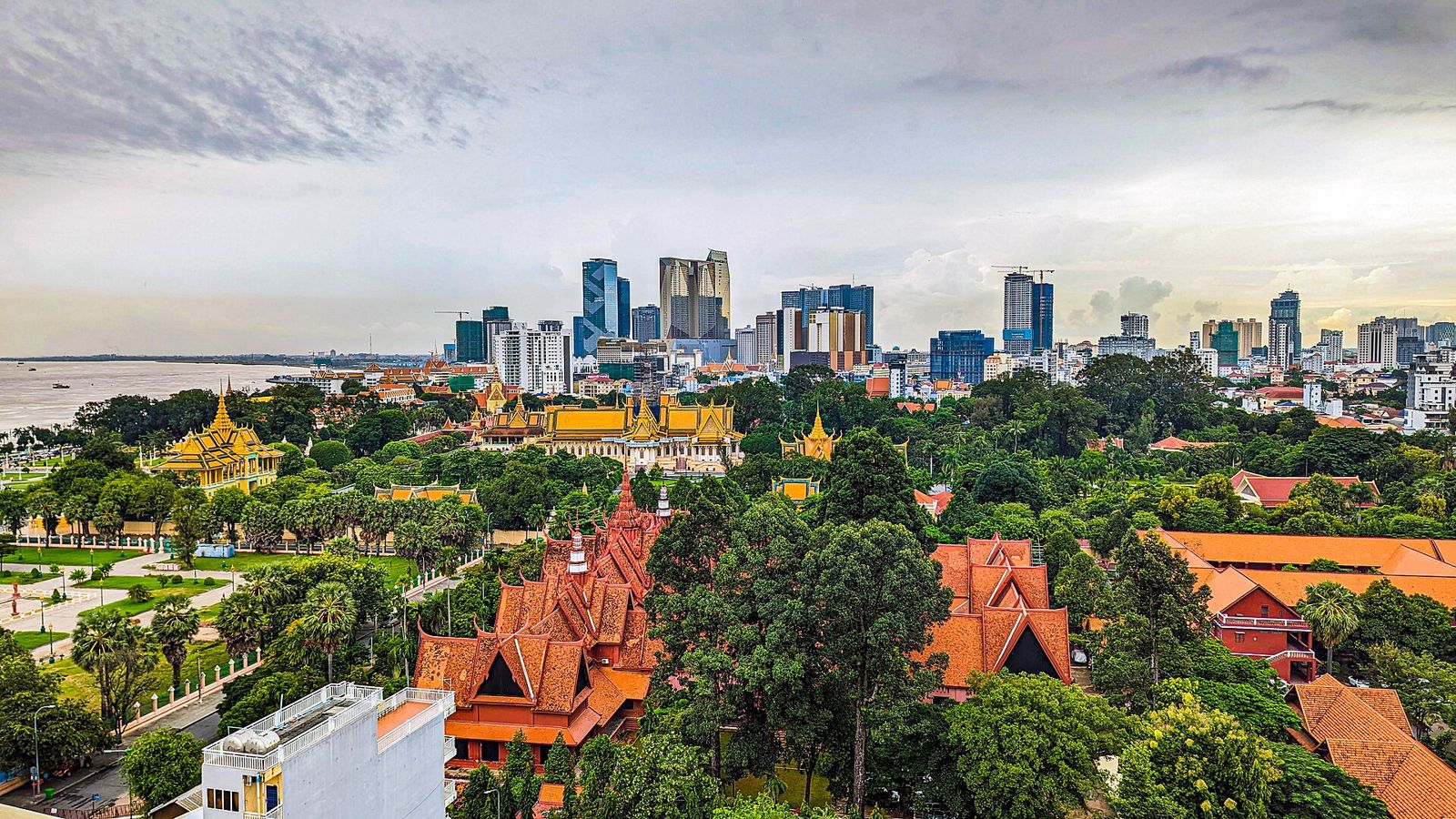
Phnom Penh city guide
មគ្គុទ្ទេសក៍ភ្នំពេញ
Cambodia's capital sits where the Mekong, Tonle Sap and Bassac rivers meet. It is compact, cheap and changing fast — here is how the city is laid out, what it costs, and what is worth your time.
Population
~2.3 million
Metro area, growing quickly
Typical tuk-tuk hop
$1.50 – $3
App-booked, inside the centre
Expat hub
BKK1
Highest rents, most cafés and clinics
How the city is laid out
Phnom Penh is organised into khan (districts) and sangkat (communes), but in daily conversation people use neighbourhood shorthand. Daun Penh covers the riverfront, Royal Palace and the old French colonial quarter — the densest concentration of sights and the busiest traffic.
Boeung Keng Kang, universally called BKK1, is the main expatriate district: tree-lined streets, coffee shops, international clinics and the highest rents in the country. Toul Tom Poung, known as Russian Market, is the cheaper, more mixed alternative with a strong café and street-food scene. Chroy Changvar sits across the Japanese Bridge and has newer riverfront apartments at lower prices.
Sen Sok and Chamkar Mon hold most of the newer condominium towers and shopping malls, while Chbar Ampov and Meanchey are largely local residential areas where rents drop sharply.
Getting around
Ride-hailing apps dominate. Remorks (the trailer-style tuk-tuk) and small three-wheel rickshaws are cheapest, motorbike taxis are fastest in traffic, and air-conditioned cars cost roughly double a tuk-tuk. Short trips inside the centre are normally $1.50 to $3; crossing the city runs $4 to $7.
The city bus network is inexpensive but slow and limited in coverage. Renting a motorbike is common among residents at $50 to $90 a month — bring an international or Cambodian licence, wear a helmet, and expect assertive traffic with limited lane discipline.
Phnom Penh International Airport is about 10 km west of the centre; allow an hour in peak traffic. A new larger airport southeast of the city is being phased into service, so confirm which one your flight uses.
What to see
The Royal Palace and Silver Pagoda complex is the city's landmark; go early, dress with shoulders and knees covered. Next door, the National Museum holds the world's best collection of Khmer sculpture and takes about 90 minutes.
Tuol Sleng Genocide Museum and the Choeung Ek killing fields document the Khmer Rouge period. They are heavy but essential to understanding modern Cambodia — most visitors pair them in one morning and plan nothing demanding afterwards.
For lighter days: Wat Phnom, the riverside promenade at sunset, Central Market's art-deco dome, and Russian Market for textiles and food. Koh Dach, the silk island, is a half-day escape 15 km upriver.
Living costs and practicalities
A one-bedroom serviced apartment in BKK1 runs roughly $450 to $800 a month; the same in Toul Tom Poung or Chroy Changvar is $250 to $450. Electricity is the big variable — heavy air-conditioning use can add $60 to $150 in the hot season.
US dollars circulate alongside riel, and change under a dollar comes back in riel. Card acceptance is good in malls and mid-range restaurants, and the KHQR code system covers almost everything else, but keep small notes for markets and tuk-tuks.
Tap water is not for drinking. Air quality dips noticeably in the dry season from construction dust and burning, which is worth knowing if you have respiratory issues.
Frequently asked questions
- How many days do you need in Phnom Penh?
- Two full days covers the Royal Palace, National Museum, Tuol Sleng and Choeung Ek at a reasonable pace. A third day lets you add Russian Market, the riverfront and a half-day trip to Koh Dach silk island.
- Which area of Phnom Penh is best to stay in?
- Daun Penh near the riverfront is best for short visits because most sights are walkable. BKK1 suits longer stays and expats, with cafés, clinics and international food. Toul Tom Poung is the cheaper, more local-feeling alternative.
- Is Phnom Penh safe for tourists?
- Violent crime against visitors is uncommon, but phone and bag snatching from passing motorbikes is the main risk. Keep your phone off show on the street, carry bags on the inside of the pavement, and use app-booked transport at night.
- How much does a tuk-tuk cost in Phnom Penh?
- App-booked tuk-tuks cost about $1.50 to $3 for short trips within the centre and $4 to $7 across the city. Street-hailed drivers quote higher, so agree the price before setting off.
- Do I need cash in Phnom Penh?
- Yes, though less than before. Malls, hotels and mid-range restaurants take cards, and KHQR payments are near-universal for locals, but markets, tuk-tuks and small eateries still expect cash — small dollar notes and riel.
Keep reading
- Cost of living in Cambodia
- Cambodia visas: e-Visa, arrival and extensions
- Rent or buy property in Phnom Penh
- Map of places to visit in Phnom Penh
- Cambodian food: dishes, prices and where to eat
Photo: Phnom Penh skyline — Wikimedia Commons (CC BY-SA 4.0)