
Renting an apartment or house in Cambodia
ការជួលផ្ទះនៅកម្ពុជា
Renting is how almost every newcomer starts in Cambodia, and the market is informal enough that a careful tenant saves real money. Here is what different standards cost, how leases and deposits usually work, and what to inspect before handing over cash.
Local one-bed
US$200 – 350
Khmer-style building, outside centre
Serviced one-bed
US$450 – 800
Pool, gym, cleaning included
Typical deposit
1 – 2 months
Refundable at end of lease
What rent costs by city and standard
In Phnom Penh, a plain one-bedroom flat in a Khmer-style building outside the centre runs US$200-350 a month. A serviced apartment with a pool, gym and weekly cleaning in BKK1, Toul Kork or Chroy Changvar is US$450-800, and a three-bedroom family apartment or townhouse US$900-1,800. Furnished is the default; unfurnished is rarer and only slightly cheaper.
Siem Reap sits roughly 30-40% below the capital for the same standard, with two-bedroom houses widely available at US$300-500 and simple studios from US$150. Battambang, Kampot and Kep are cheaper again but with far thinner supply, so the good listings move by word of mouth rather than online.
Short-term monthly rates on serviced apartments carry a 20-40% premium over a twelve-month lease. If you are staying a year, commit to a year — the discount is the largest single saving available to a tenant here.
Leases, deposits and negotiation
The standard lease is twelve months with one or two months' deposit and the first month paid up front. Rent is quoted and usually paid in US dollars, in cash or by local bank transfer. Contracts are typically short, bilingual and light on tenant protection, so what is written down matters.
Negotiating 5-10% off an advertised price is normal, and more if you pay several months in advance or take a longer term. Landlords will often throw in free parking, a repaint or an extra air conditioner rather than cut the headline rent — ask for those explicitly.
Get in writing who pays for repairs, the exact utility rates, the notice period, and the conditions for returning the deposit. Photograph the whole unit including existing damage on the day you move in. Deposit disputes are the most common tenant complaint in Cambodia and photographs settle most of them.
Utilities and the real monthly cost
Electricity is the biggest variable and is where landlord markups appear. The state rate is charged per kilowatt-hour, but some landlords bill a fixed higher rate per unit. Ask to see the meter and the rate before signing: a modest flat with occasional air conditioning runs US$30-60 a month, and a family house running AC most of the day US$100-200.
Water is usually US$5-15 a month and often bundled into serviced rent, along with rubbish collection and building security. Fibre internet at 50-200 Mbps is US$15-30 a month and is sometimes included in serviced buildings.
Add parking if you have a car, and factor in that many older buildings have no lift. A US$300 flat with a punitive electricity rate can end up costing more than a US$400 serviced unit with utilities capped.
Finding a place and avoiding problems
Listings appear on local property portals, Facebook groups and agency websites, but the best-value units in both Phnom Penh and Siem Reap are still found by walking a neighbourhood you like and calling the numbers on the gates. Agents are generally paid by the landlord, so their service costs a tenant nothing — but they also have no incentive to talk you out of a bad unit.
Inspect at the time of day you will actually be home. Check water pressure, whether hot water works, mobile signal inside the unit, noise from nearby construction or karaoke bars, and whether the road floods in the rainy season — a genuine issue in parts of Phnom Penh and Siem Reap between June and October.
Confirm the person signing is the owner or holds written authority, and that the building has no ongoing ownership dispute. For longer stays, registering the lease gives you far more standing than a private agreement if things go wrong.
Frequently asked questions
- How much is rent in Phnom Penh per month?
- A basic one-bedroom flat outside the centre costs US$200-350 a month. Serviced one-bedroom apartments with a pool and gym run US$450-800, and three-bedroom family homes US$900-1,800.
- How much deposit do landlords in Cambodia ask for?
- One to two months' rent is standard, refundable at the end of the lease, plus the first month paid in advance. Photograph the unit on move-in day, because deposit deductions for pre-existing damage are the most common dispute.
- Can foreigners rent property in Cambodia?
- Yes. There is no restriction on foreigners renting apartments, houses or commercial space, and no residency requirement to sign a lease. Landlords normally ask for a passport copy.
- Is rent cheaper in Siem Reap than Phnom Penh?
- Yes, generally 30-40% cheaper for a comparable standard. Two-bedroom houses in Siem Reap are widely available at US$300-500 a month against US$700-1,000 in central Phnom Penh.
- Are utilities included in Cambodian rent?
- Serviced apartments often include water, rubbish, security and sometimes internet, but electricity is almost always billed separately and can carry a landlord markup. Always confirm the per-kilowatt-hour rate before signing.
- Do I need a lease contract in Cambodia?
- Yes, and preferably a bilingual one. Registering a longer lease at the cadastral office gives far stronger protection than a private agreement if the property is sold or a dispute arises.
Keep reading
- Browse property for rent in Cambodia
- Houses for rent in Siem Reap
- Apartments for rent in Phnom Penh
- Buying property in Cambodia
- Cost of living in Cambodia
- Phnom Penh city guide
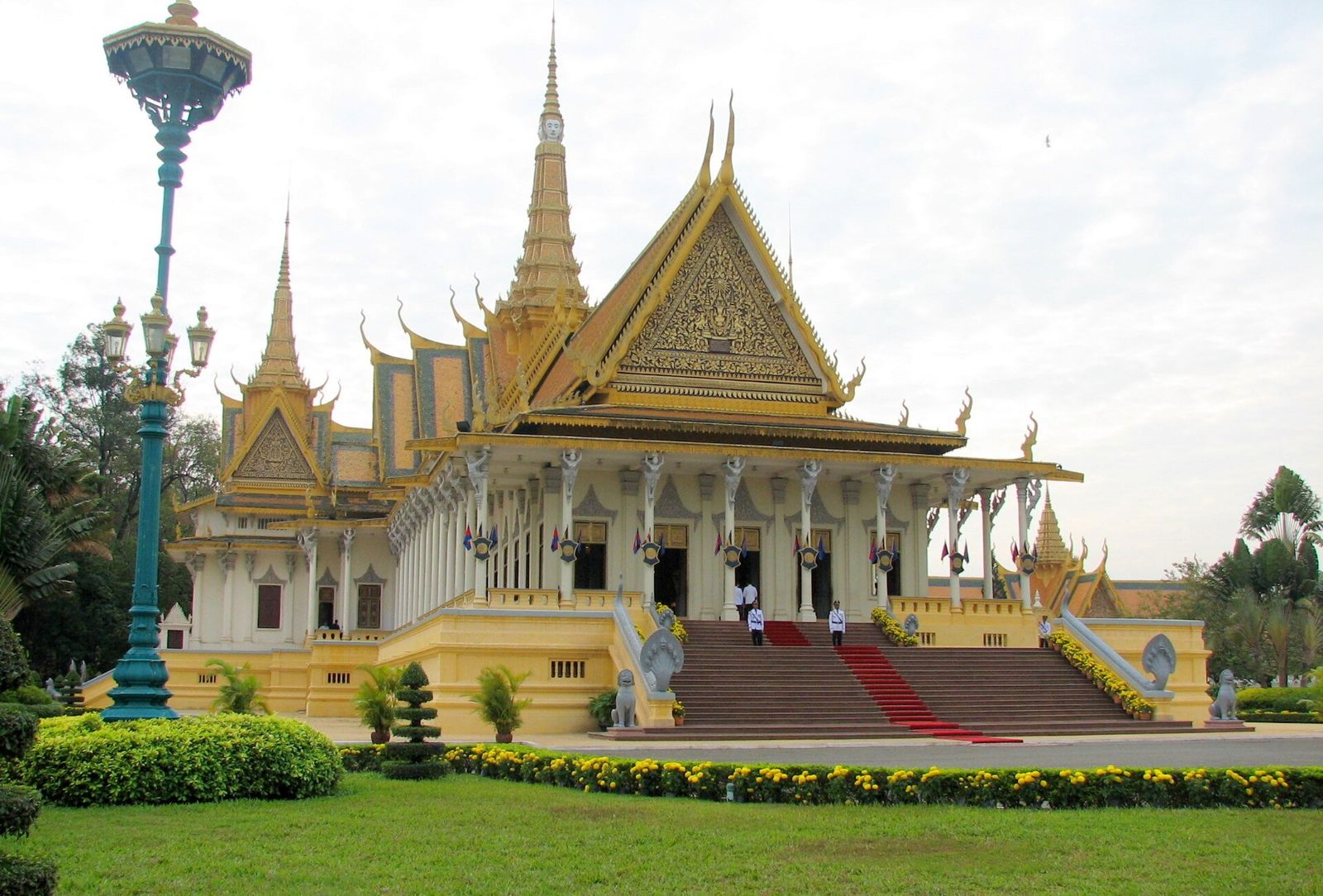
Photo: Royal Palace, Phnom Penh — Wikimedia Commons (CC BY-SA 3.0)